Most commercial ideas emerge with the promise of productivity and potentially transformative impact.
At first, it’s a cohort of genuine innovators. But as rewards become visible, the crowd swells. Soon, due to the overflow from participants, the focus gently shifts from creating value to appearing valuable.
Leading to the creation of a bubble.
Both in price and participation.
Resembling that of a parasite, most of what appears as “growth” or “thriving” is really cannibalization: eating one another and surviving off someone else’s effort.
This pattern is not unique to markets.
It exists wherever human ambition intersects with visible rewards.
Gold Fever, Every Era
Coloma. This was the best place to be in 1848.
By 1849, the so-called “49ers” flooded the rivers and surrounding area with dreams of fortune. Some ended up with fortune, most took home nothing but exhaustion and disillusionment.
While the actual opportunist did not strike gold, those around them did.
Owners of saloons, merchants, and con men found their fortune not by mining gold but by selling peripheral items all rooted in hope, perhaps bordering on fantasy.
The Gold Rush illustrates a timeless lesson:
Once the substance runs out, the money is made on aspiration.
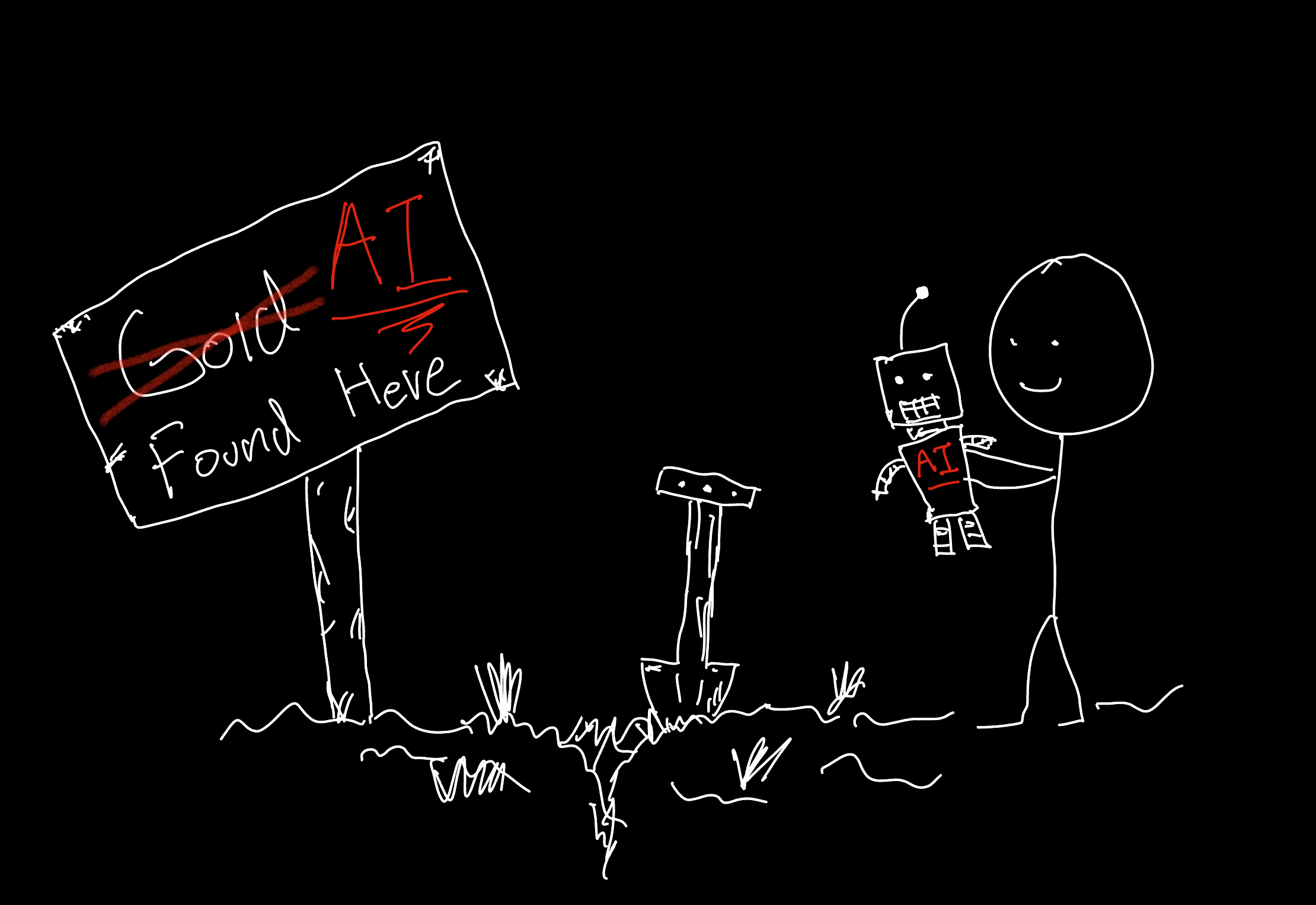
This cinema replays the same movie with different actors.
In the late 1990s, the dot-com boom mirrored the gold rush. Startups promised outsized returns on little more than a domain name. Investors bought the story, driven by first-mover advantage.
In 2008, the real estate bubble magnified these principles on a global scale. Cheap credit and the illusion of perpetual growth led the way.
Homes, similar to those gold in the creeks of Coloma, seemed abundant. Soon, banks and investors created complex products that fed off of each other’s assumptions. As it scaled, the collapse was equally as catastrophic.
Perhaps AI is on a similar trajectory, but the focus isn’t the bubble.
It’s the parasites.
The Rise of Parasites
The modern “Gold Rush” has taken more of a discreet form.
Tangible assets are replaced by digital promises and often intangible products such as Multi-level marketing, blockchain, crypto, and AI certifications. Iteration is endless.
The fundamentals haven’t changed.
Each participant feeds on the next without creating value.
As the loop becomes self-referential, the system veers towards collapse.
AI is the new frontier.
Courses, certifications, and “expert coaching” promise mastery to the new 49ers, with everyone hoping to claim a share of the gold before it disappears.
What drives these bubbles and the profit of parasites is twofold:
Lack of depth in the emerging domain
Monetizing the fear of missing out
The model is to take advantage of other people’s ambition and sometimes greed, coupled with the anxiety of those trying to learn, to not get left behind. All without creating any new value. Profiting from pure commotion rather than mastery.
In nature, parasites outnumber mammals because surviving off others is easier than surviving independently.
Markets, culture, and education are no different. Even on Substack, more people teach “How to write on Substack” than consistently write.
There’s a fine line between skepticism and cynicism.
Long-term survival requires discernment.
The world, especially an emerging one such as AI, is full of parasites disguised as “helping hands”. Those who thrive off extraction of value rather than the creation.
One must filter to preserve time, attention, and capital.
The Rebellion
Performance is a function of learning.
Today, we equate certification with learning. This is false.
Certification signals achievement but not necessarily learning or understanding. All learning requires friction, time, and consistent effort. Qualities that are in direct competition with what is being sold by the attention economy.
Every generation believes it has discovered a faster route to mastery. By the time a “course” exists, marginal value has often diminished.
The most meaningful lessons rarely announce themselves publicly.
One cannot anticipate every bubble or resist every product being sold, but we can anchor to principles that outlast cycles and trends.
Focus, in the modern world, is a form of rebellion.
To sit out a bubble and avoid parasites in any domain requires independence of mind.
All value eventually reverts to fundamentals.
For the Joy of Learning,
Su Hawn